90-day Onboarding Experience
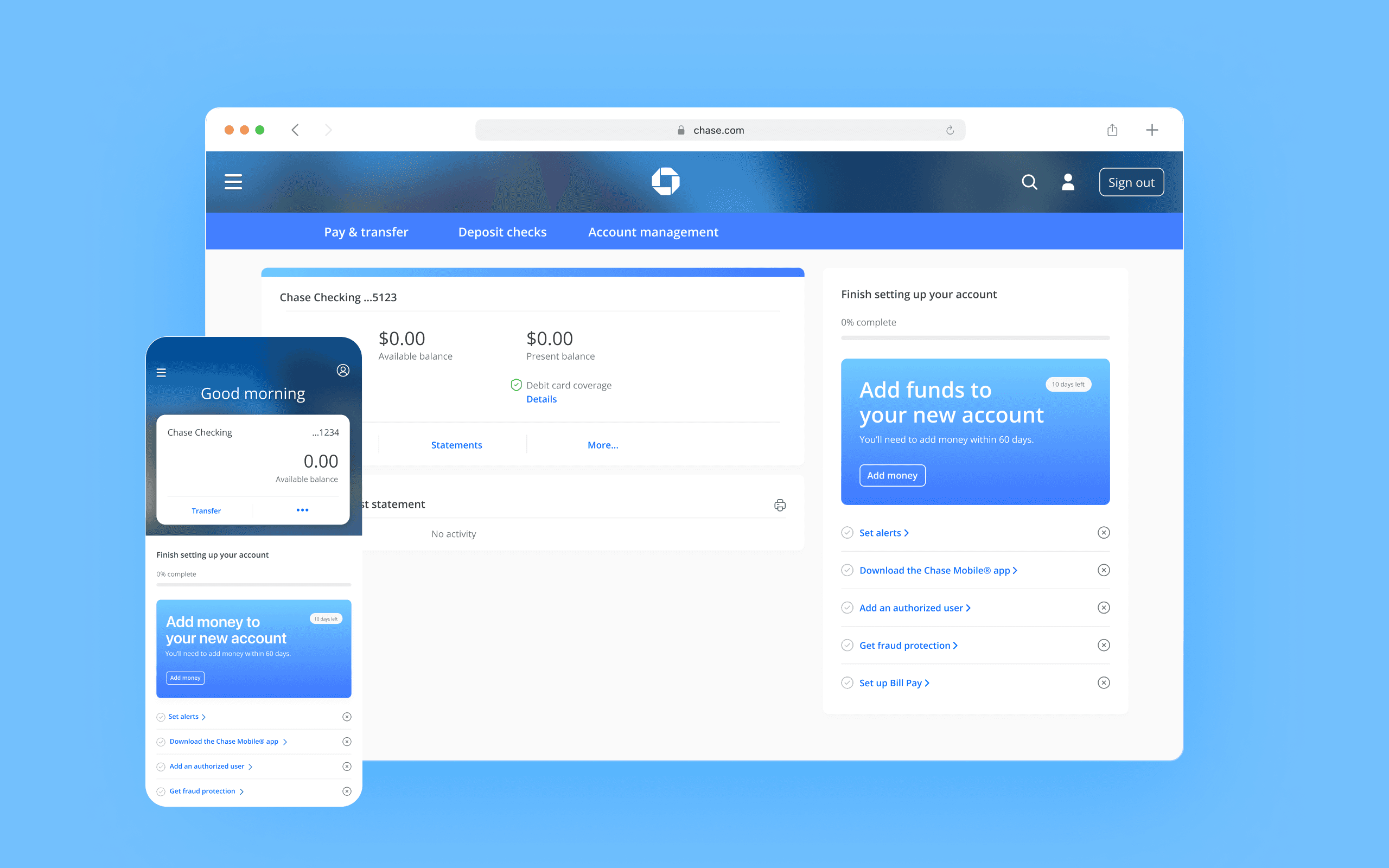
Overview
The Chase first 90-days initiative reimagined the onboarding experience for JPMorgan Chase, cultivating trust and loyalty among new and existing customers at a time when major financial institutions were facing increased skepticism and scrutiny.
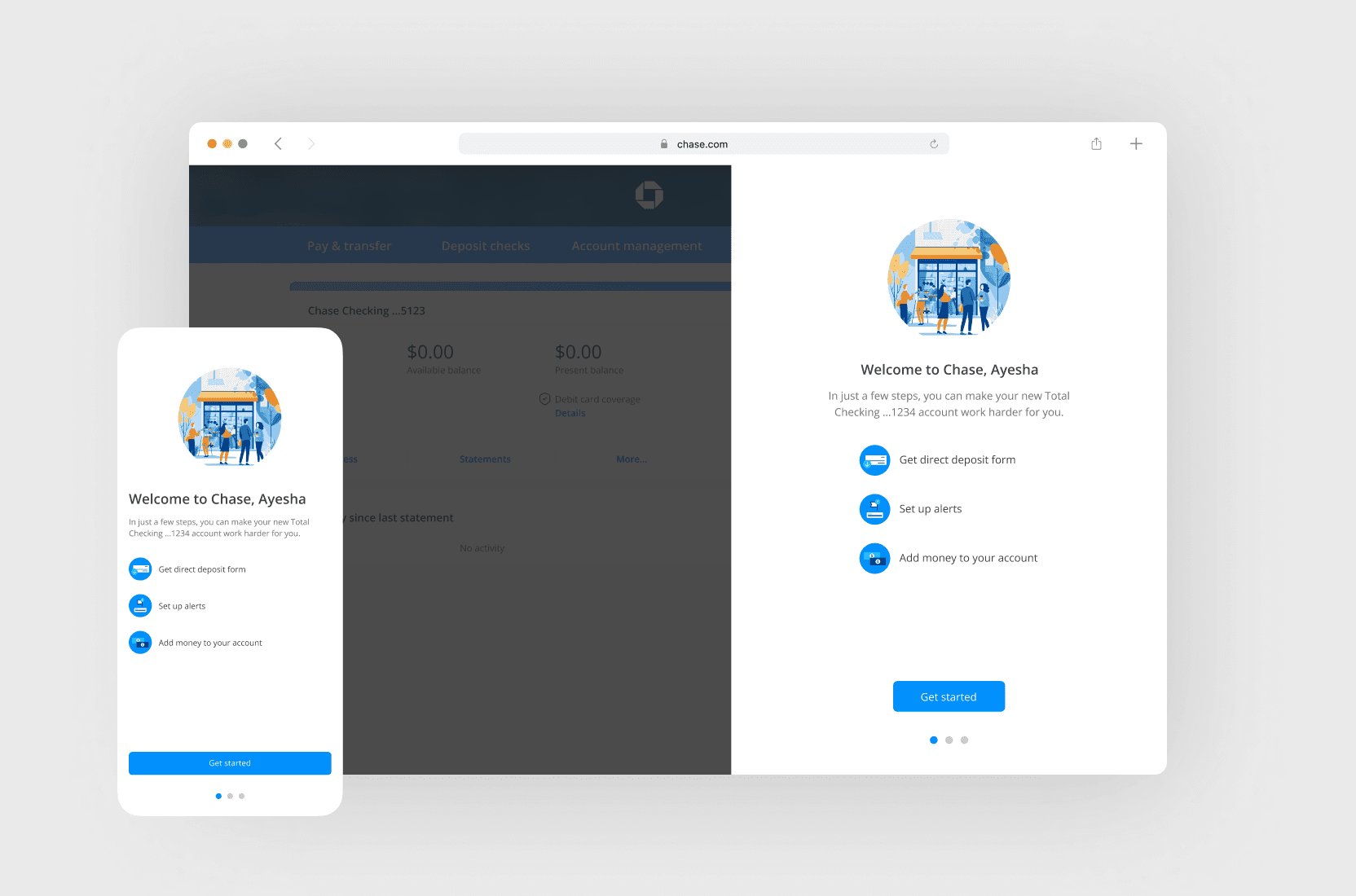
This intuitive and guided digital onboarding experience encourages customers to deeply engage with their accounts and services from day one. Now, customers can set up everything that used to require an appointment at their bank branch from the comfort of their couch.
Role
UX
UI
UXR
Prototyping
Design direction
I was lead designer from concept to delivery, owning strategy, flows, UX and visual design, while managing and mentoring one interaction designer who owned exploring targeted moments within the overall experience.
Problem
Chase leaned heavily on its extensive network of physical branches, bankers, and tellers to facilitate customer onboarding and service. However, as Chase solidified its position as a frontrunner in the digital banking space, the necessity arose to adapt its customer engagement approach. With the capability for users to autonomously open accounts without branch or banker assistance, a pivotal shift in strategy was needed. Furthermore, glaring gaps in servicing emerged, such as the requirement for new-to-bank customers to establish direct deposit exclusively within a branch setting.
Objectives
We embarked on a mission to digitize onboarding services that still required in-branch completion. A successful solution would mimic the in-person relationship aspects our customers deeply valued and hit three core KPIs.
KPIs
• Percentage of new customers funding accounts in first 60 days.
• Increased usage of identity and safety measures like account alerts.
• Decrease in support costs through contact reduction for both common and seasonal issues.
Target customer segments
To ground decision making in real customer needs, we identified the two divergent customer segments who stood to benefit most from our new onboarding experience:

Mass marketing customers
Mass marketing customers make up the bulk of Chase deposit relationships, have experience with banking, and are familiar with common banking terms and practices. They need less of an introduction to banking, but rather an overview of key tasks and reminders required to start converting to a primary account.

Financial service newbies
Financial service newbies are younger customers with little to no familiarity with banking. They need greater explanation of banking terms and features, and are heavy digital users — they seek information on mobile apps or Google to answer their questions. They prefer visual aids to illustrate concepts rather than reading through a lot of text.
Mimicking the branch experience
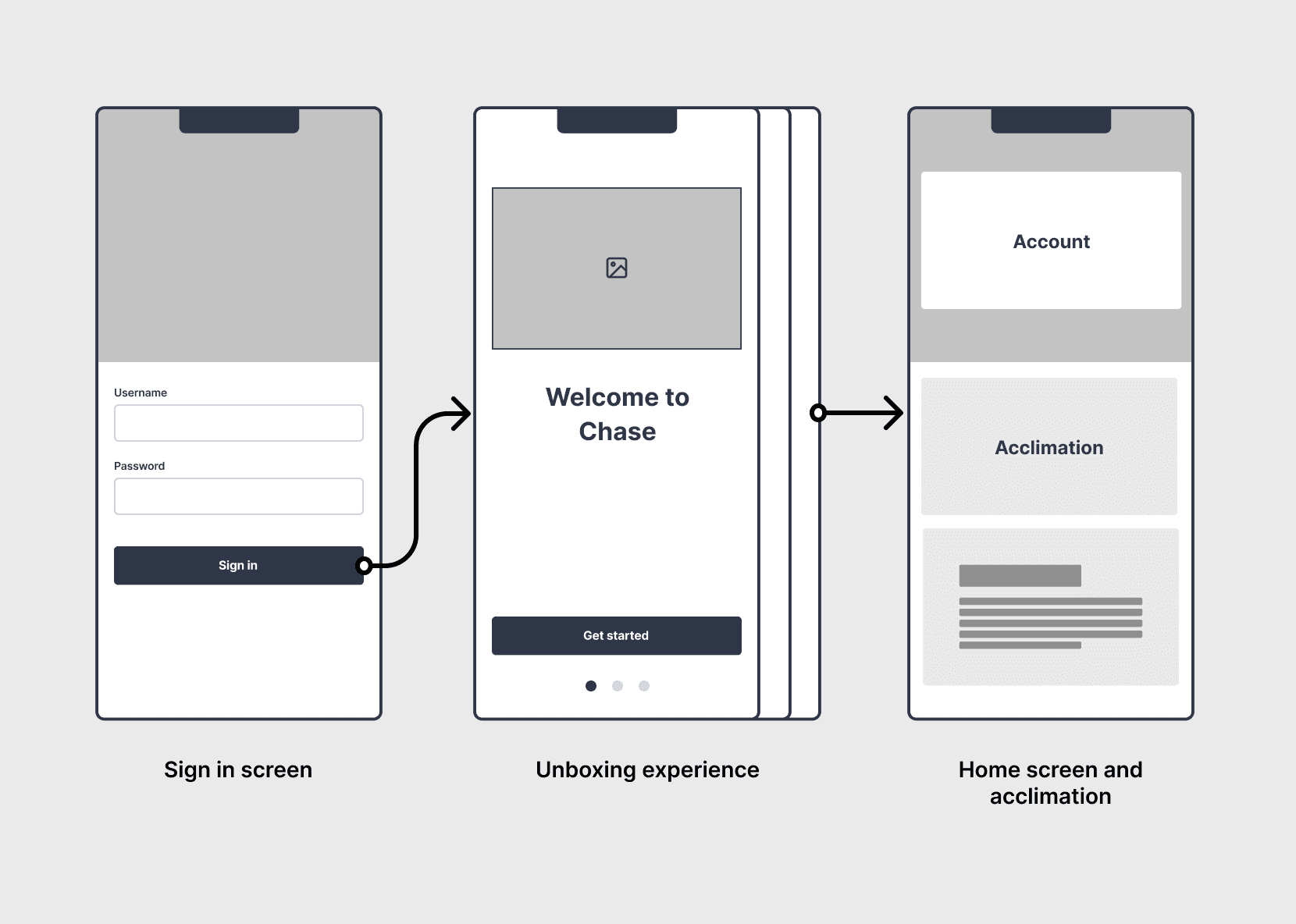
First, we discussed the boundaries of onboarding — when it starts and where it ends. Instead front-loading everything, which is a recipe for overwhelm, skipping behavior, and low memory retention, we decided to explore a 90-day onboarding which would trickle important tasks and information when it was most important and relevant. This would come in two distinct journey segments: Unboxing and Acclimation.
I approached the experience from the perspective of a relationship banker that the customer would interact with at a branch. Someone who makes them feel welcome, valued, and is there to help them get their new product set up, answer their questions, and make them aware of features and services that could be beneficial.
Unboxing: Greeting the customer
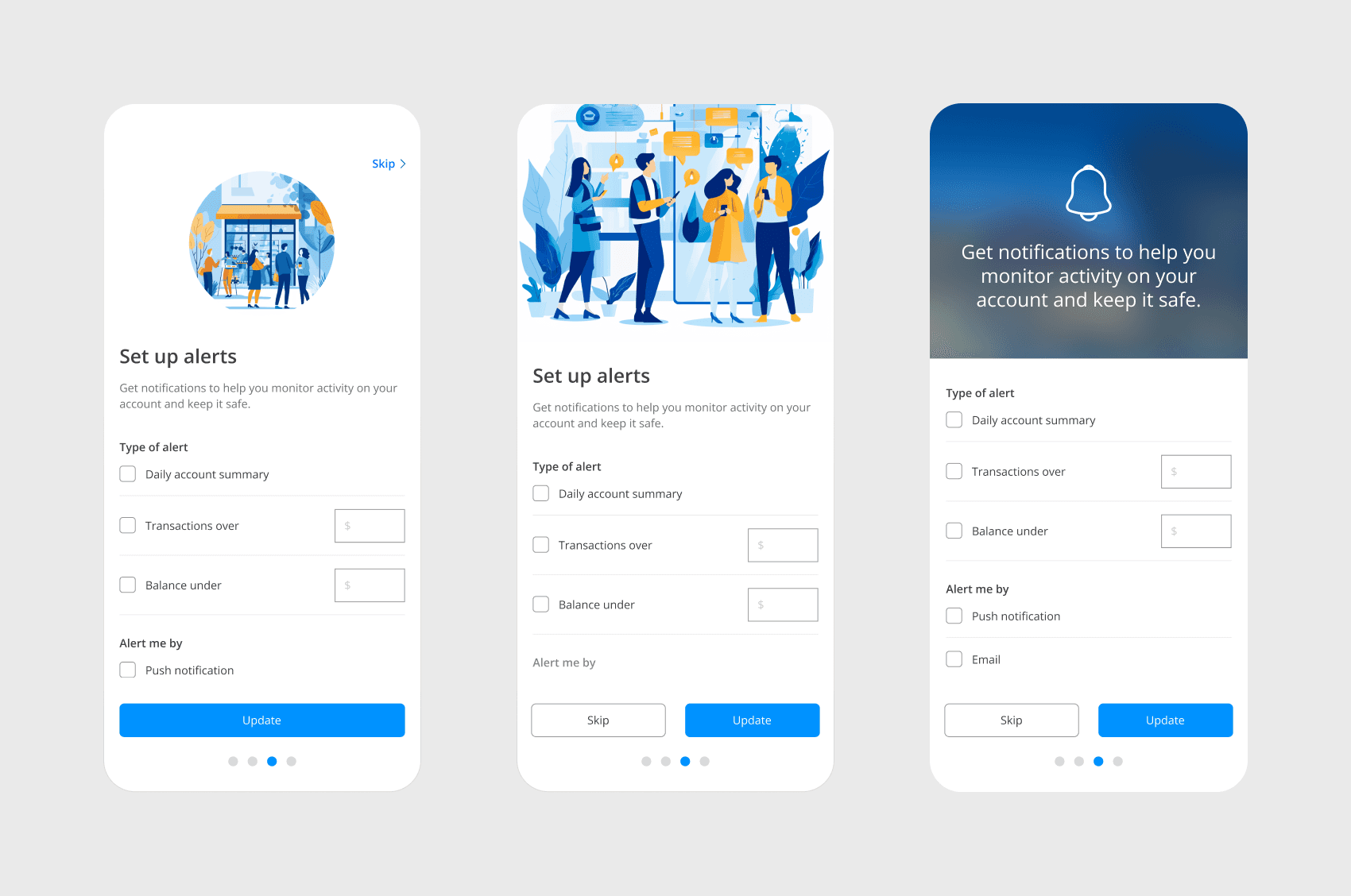
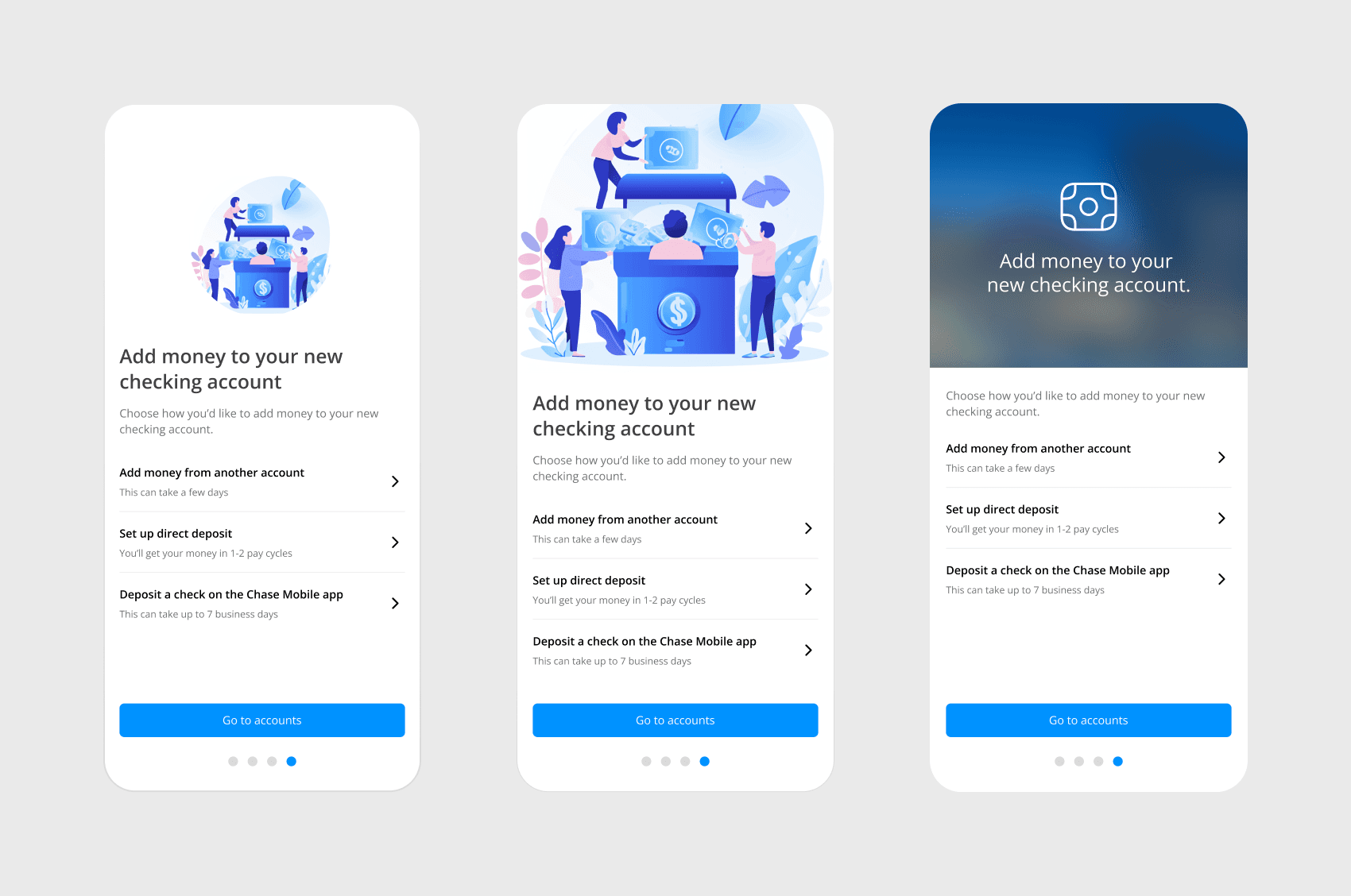
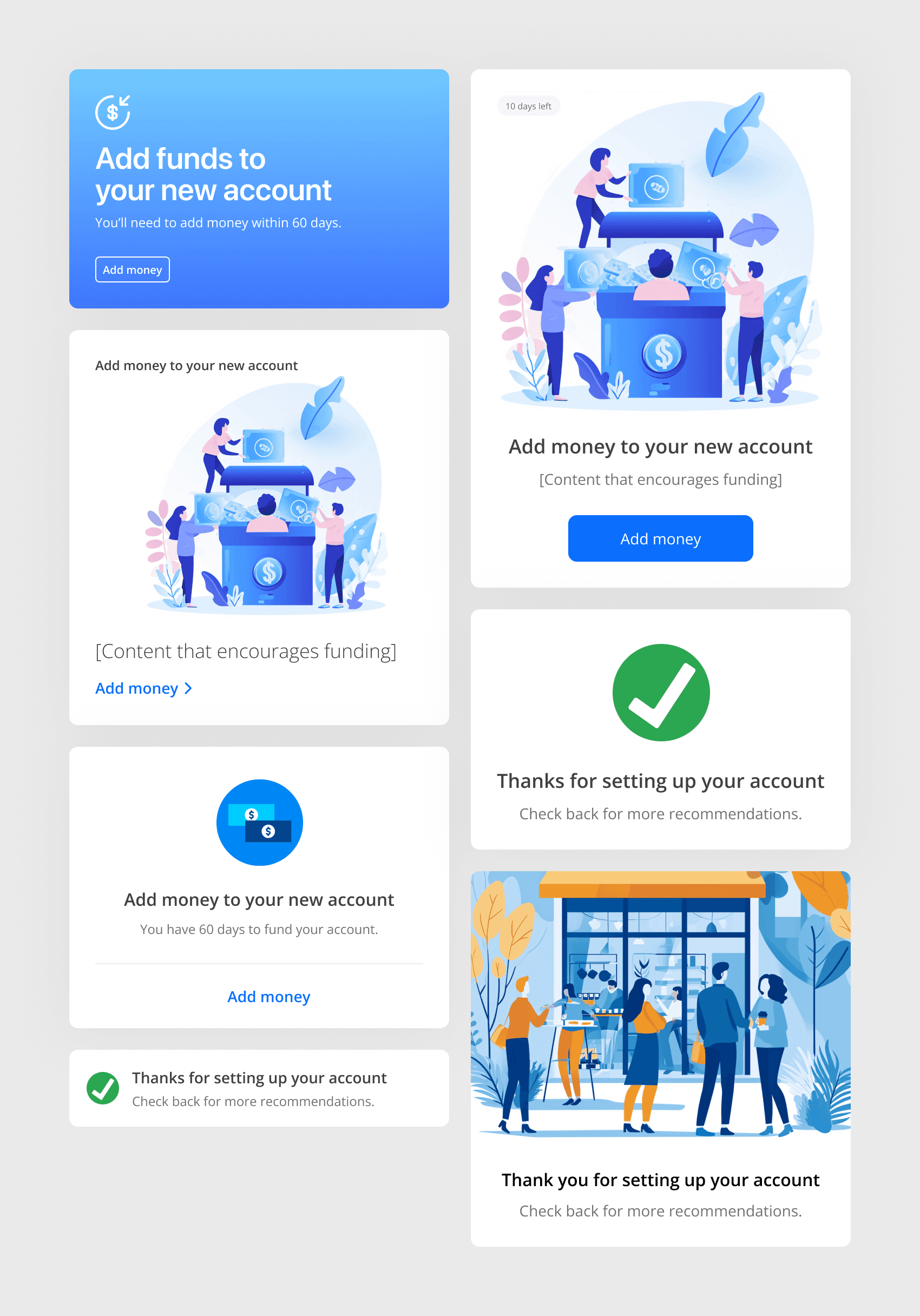
We defined unboxing as the intercept-like experience that occurs immediately after sign-in, and before you see your account screen for the first time. It should welcome you into onboarding with the same energy as a banker who offers you a cup of coffee or snack as you walk through the door. It could gently guide you into the set-up experience like a concierge, offering a few simple, helpful steps specific to your new account or card, but never forcing your hand.
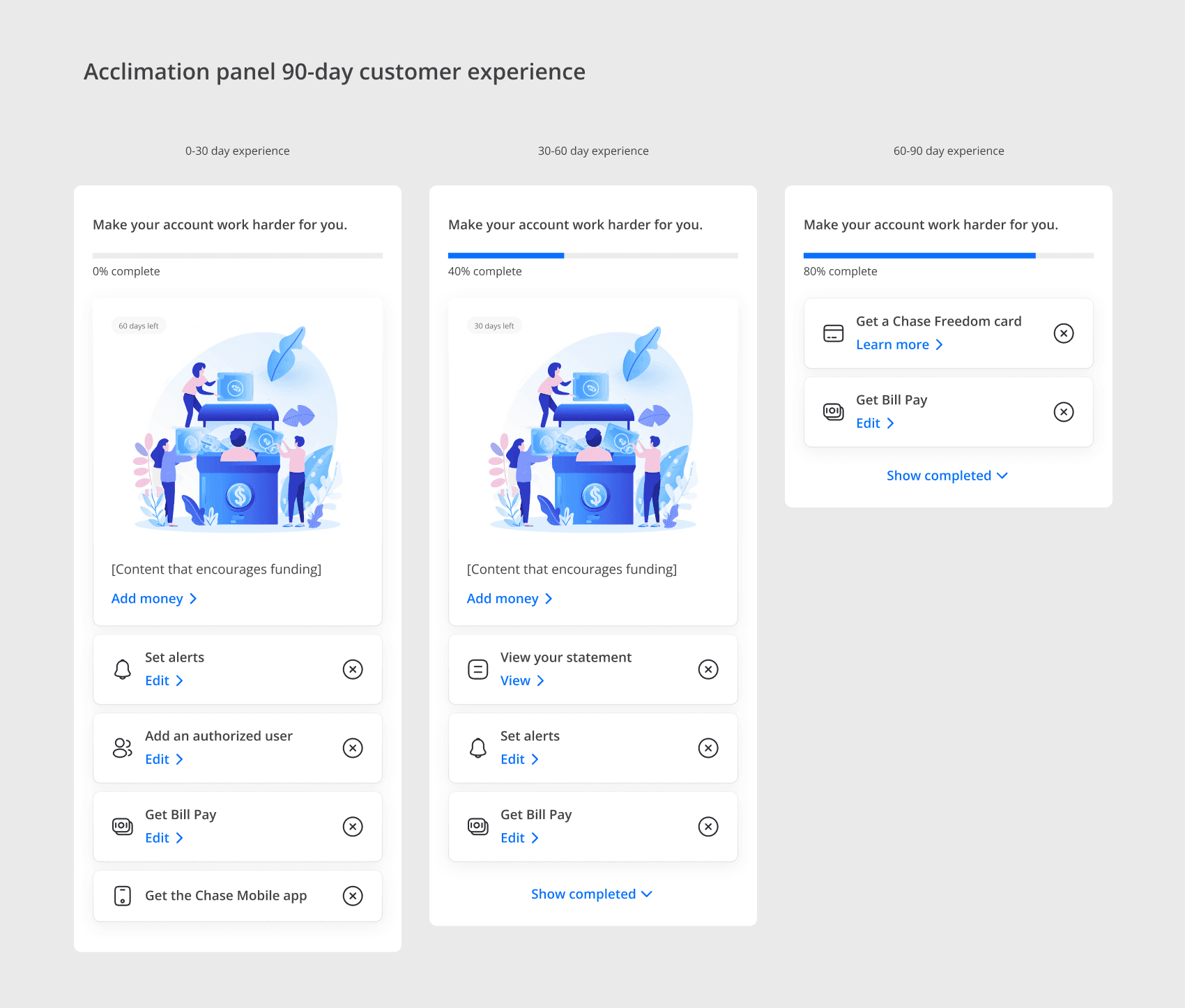
Acclimation: A 90-day companion
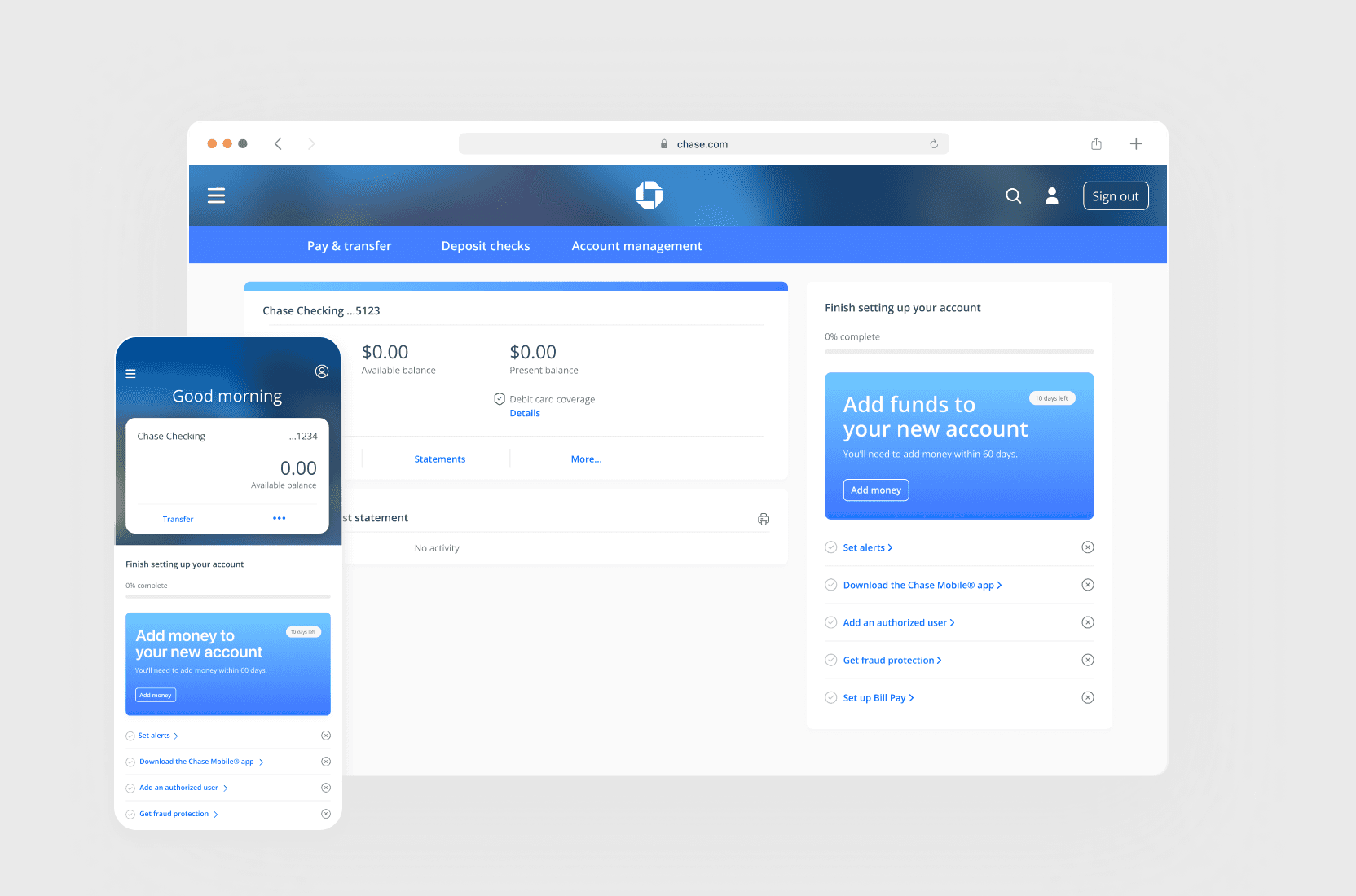
We wanted the core experience of onboarding to be a non-obtrusive banking companion. Like a concierge or butler, our 90-acclimation experience should always be there for you, never get in your way, anticipate your needs, look out for your best interests, and honor your personal choices.
As this would be an experience that would help the customer better set up their products and learn about features that could be beneficial to them, we decided it should exist on the home screen of both chase.com and the Chase Mobile app.
Principles and safeguards
Now that we had our key moments in the customer journey defined, we needed to establish principles and guidelines to ensure the onboarding experience could be applied to any product, look out for the customers best interests, honor their choices, and safeguard against becoming an ad platform.
Unboxing principles
We landed on three principles that honor what's great about in-person, and lean into the convenience of digital:
Welcoming
The experience should evoke a sense of warmth, personalization, and delight.
Quick to setup
Tasks should be swift and straightforward to complete, and we should limit the number of tasks to a short list per session — those with the highest potential impact on the next stage of your banking journey.
Actionable
Features should assist customers in setting up their newly originated product, focusing on support rather than sales or instructional content.
Acclimation safeguards
As this would become a high-visibility space, we anticipated our lines of business would be hungry to use it to boost engagement with a variety of offers. To ensure that acclimation would be reserved for its intended purpose and maintain its butler-like quality, we created guidelines that content must be related to the product the customer just originated and fall into one of the following three buckets.
Required
Tasks that are necessary to complete. Failure to complete these tasks may result in adverse consequences.
Encouraged
Tasks that enhance the customer experience with their newly originated product.
Informational
Tasks that provide insights and education and demand no additional actions. They demonstrate Chase's commitment to the best interests of customers.
UX explorations and user research
Unboxing concepts
I led the team exploring multiple concepts that tested our customers desires, informational capacity, potential behaviors, and what type of content they would find valuable during unboxing.
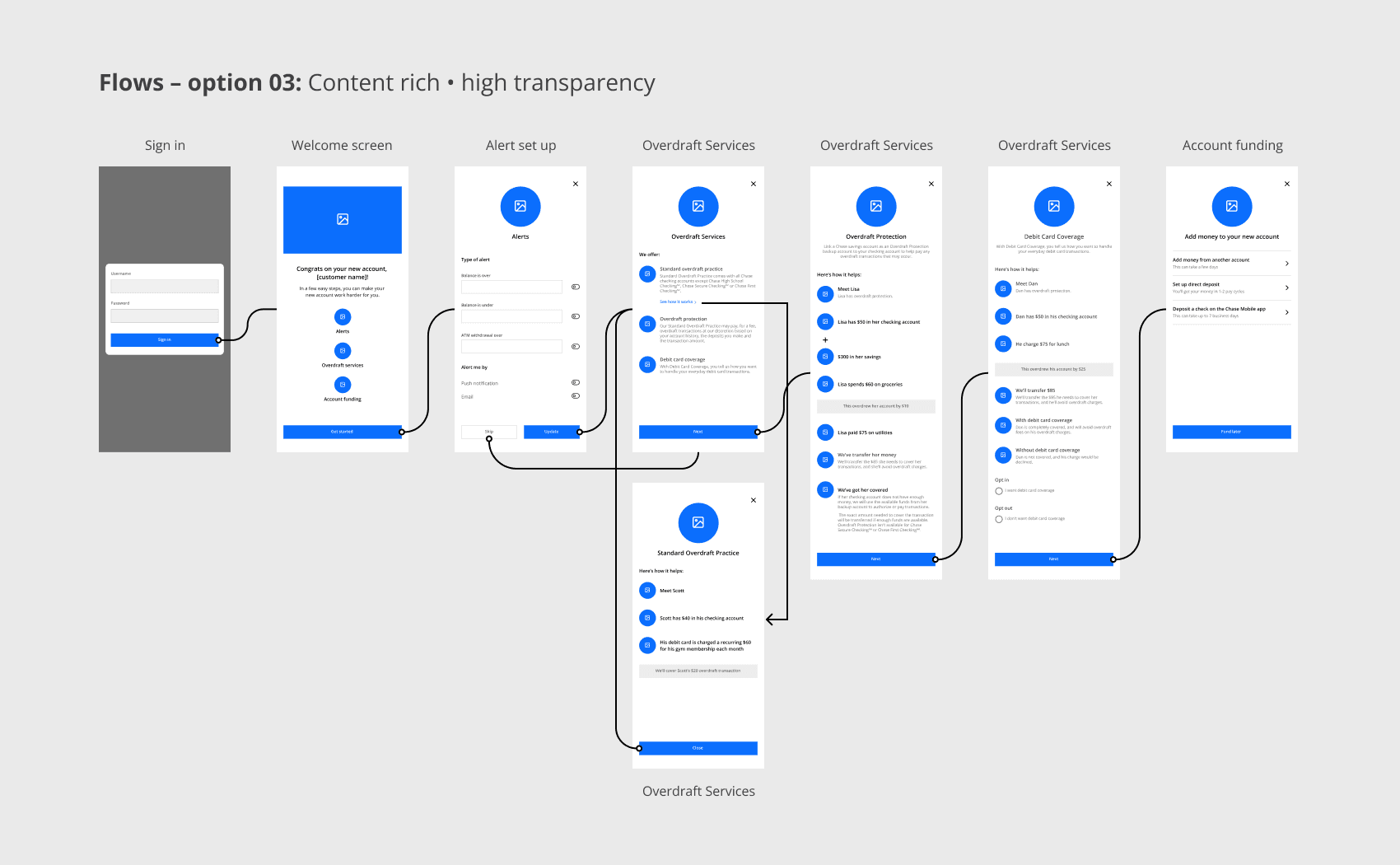
We sought to understand the customer value of the types of content we could serve, and how content volume and user interest influenced their likelihood of engaging with it.
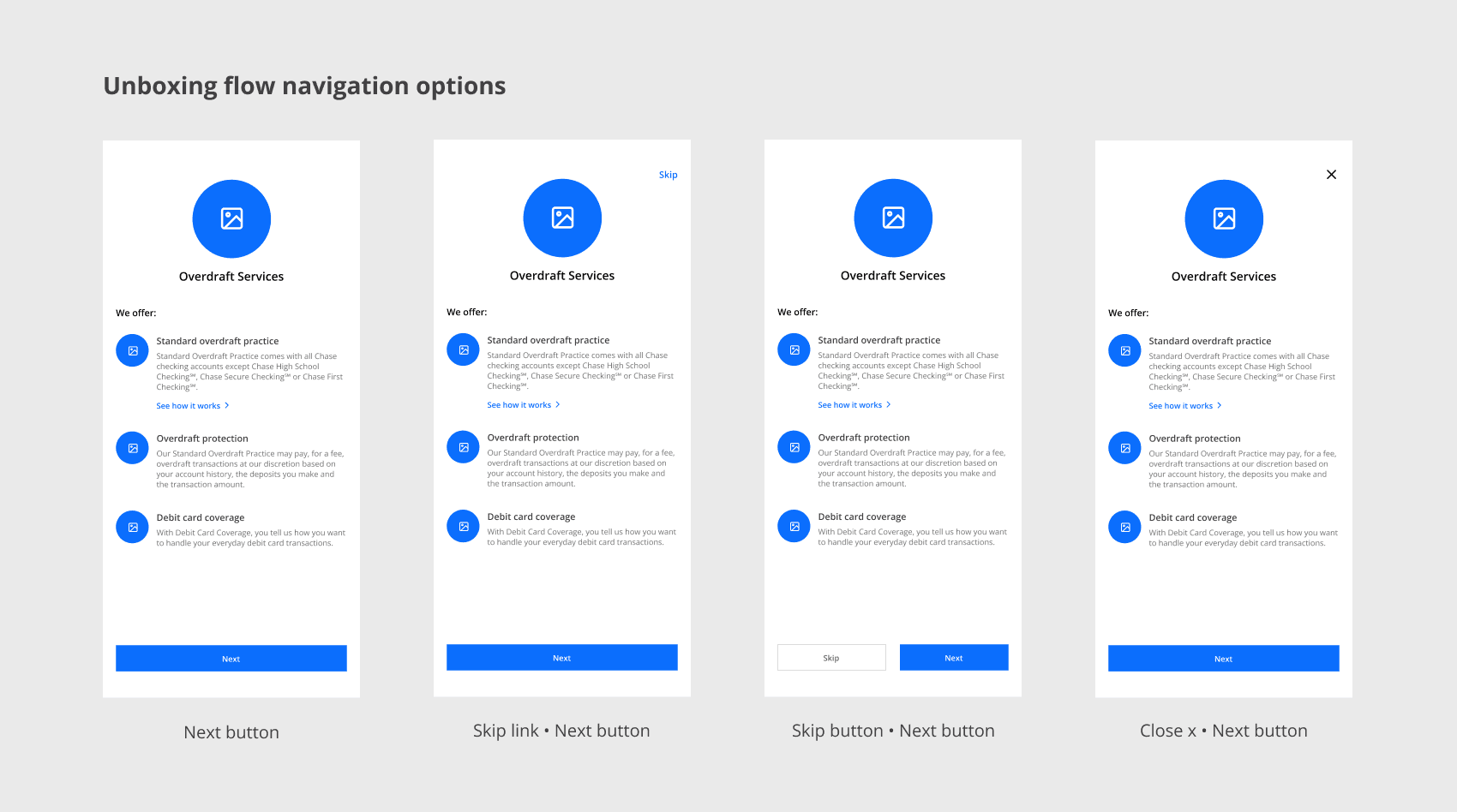
We tested customer preferences around navigating the unboxing flow, and their likelihood of completion when being presented with different ways to bypass the experience.
Acclimation
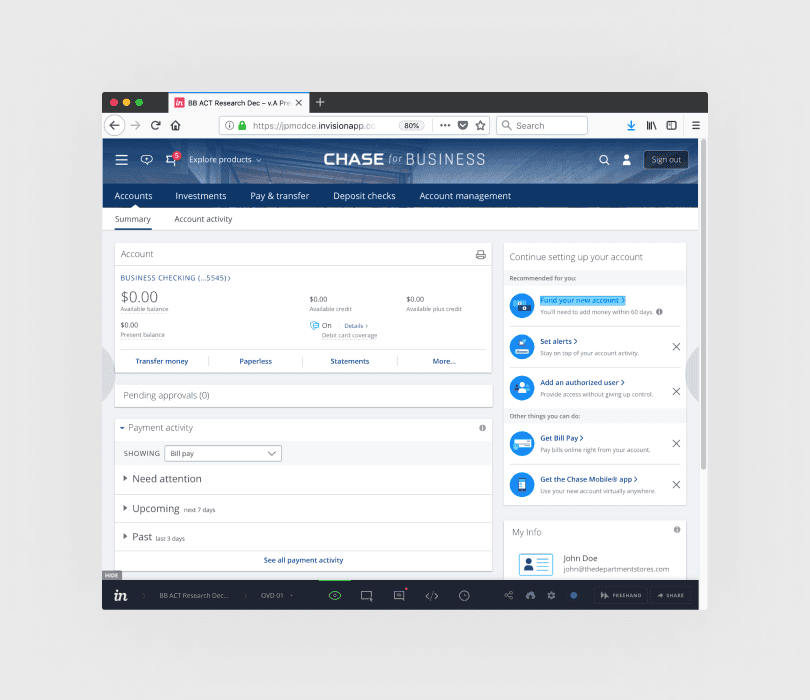
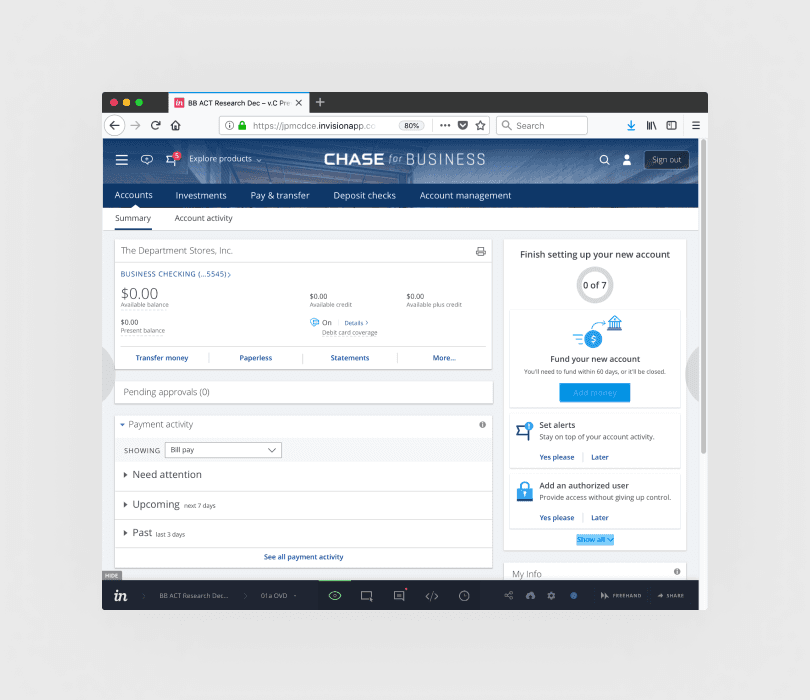
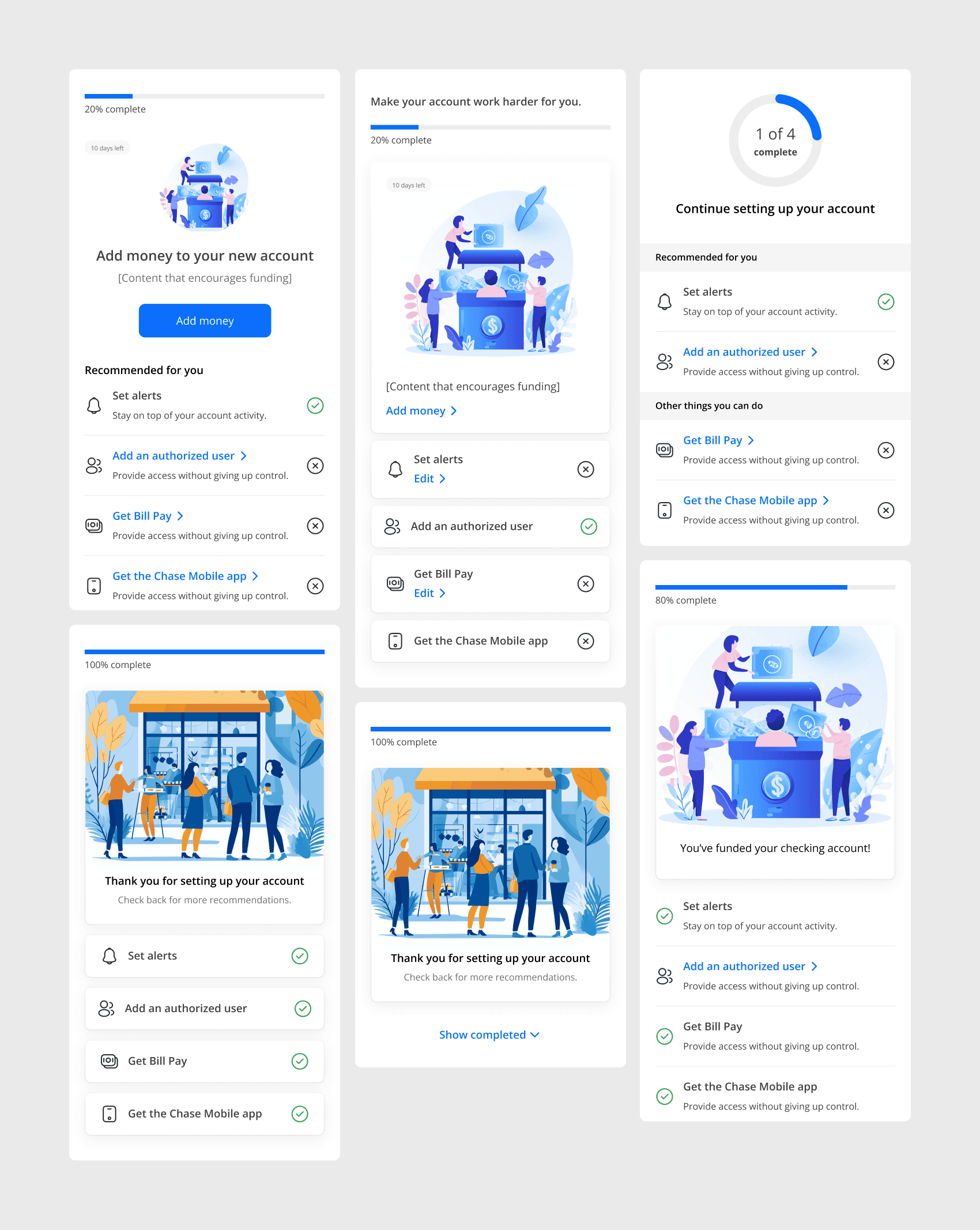
Throughout our process, I prioritized extensible explorations that could be applied to experiences in initial 30 days of a newly originated account, as well as 60 day and 90 day milestones. We explored various aspects of the acclimation experience, considering how we could encourage completion, delineate tasks, provide clarity on ways to take action, and display tasks that had been completed or dismissed.
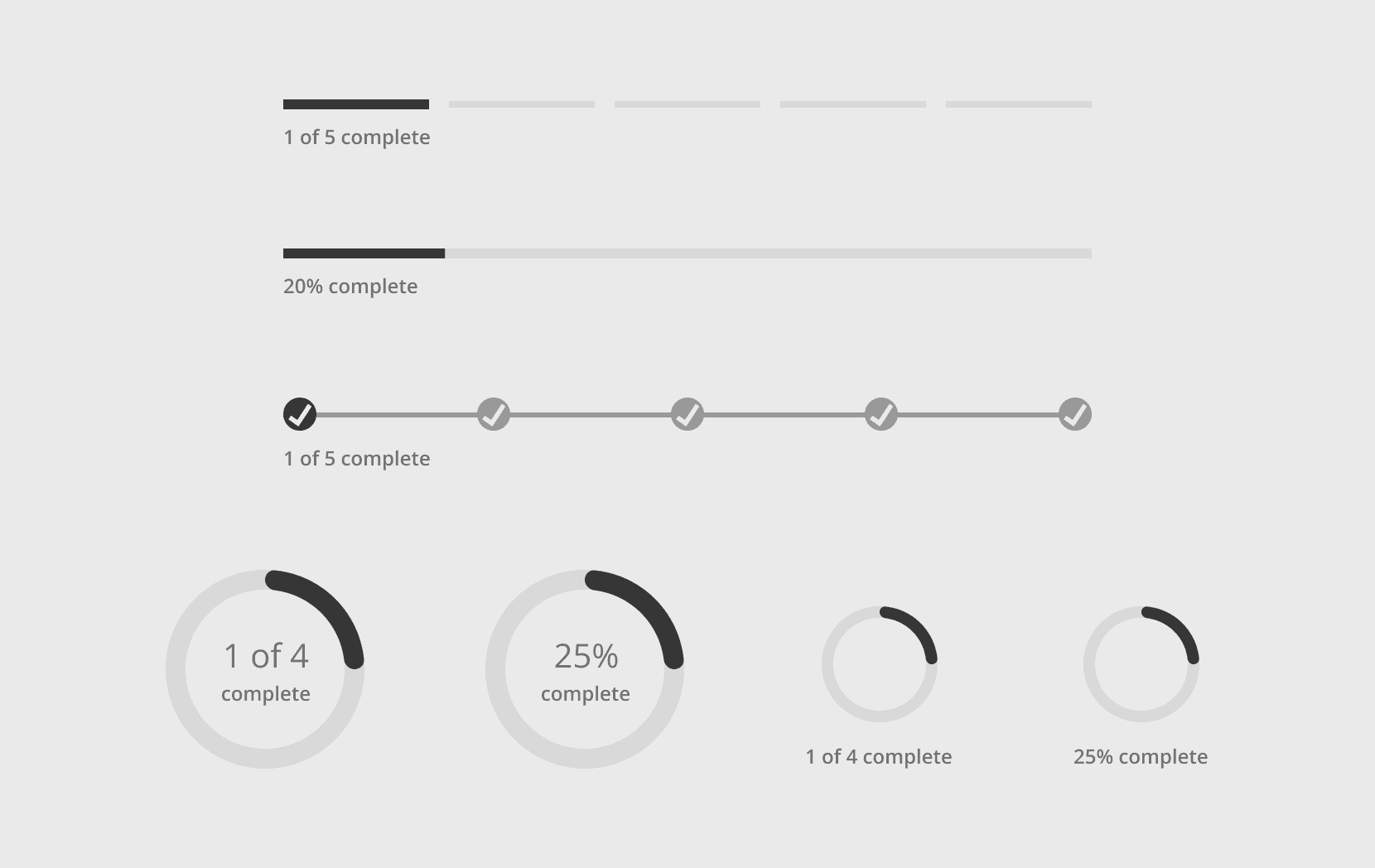
Sample explorations of progress indicators. This would help us understand what customers prefer to being shown their task list completion status, and encourages completion.
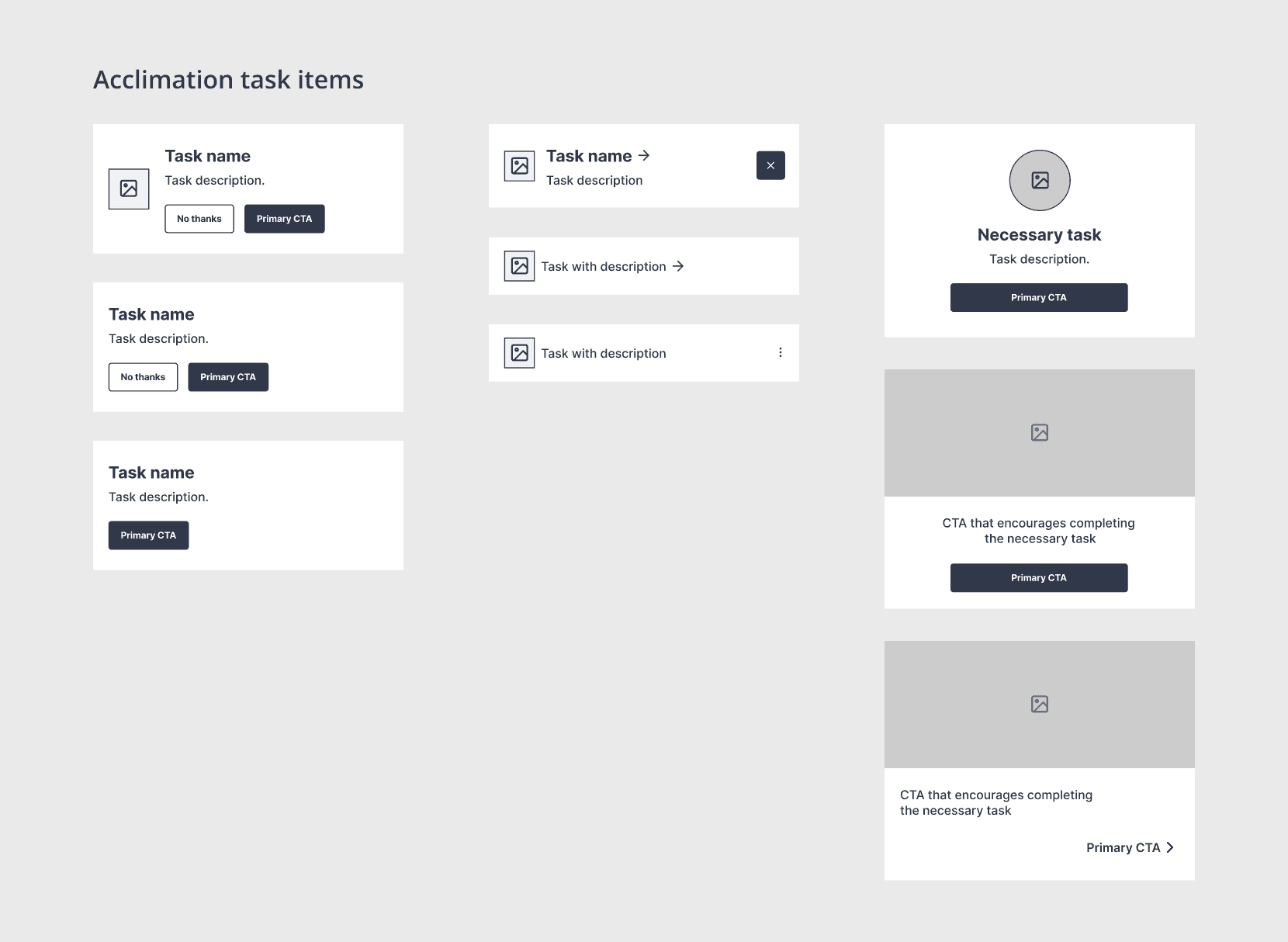
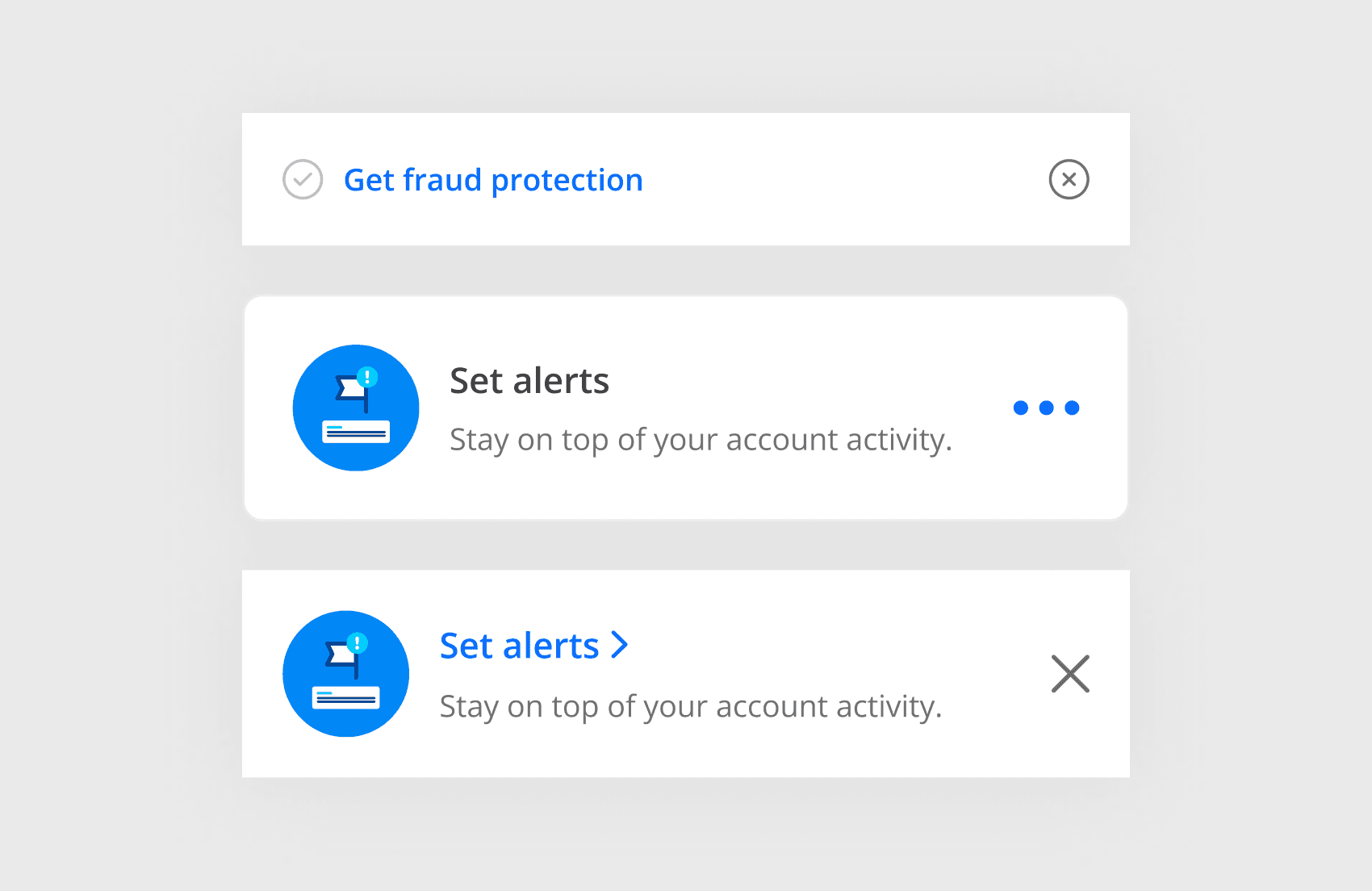
Sample explorations of task list items. We wanted to understand customer preferences around an tasks within the list, and how they would take action on each task.