Chase Mobile® Web View Integration
Overview
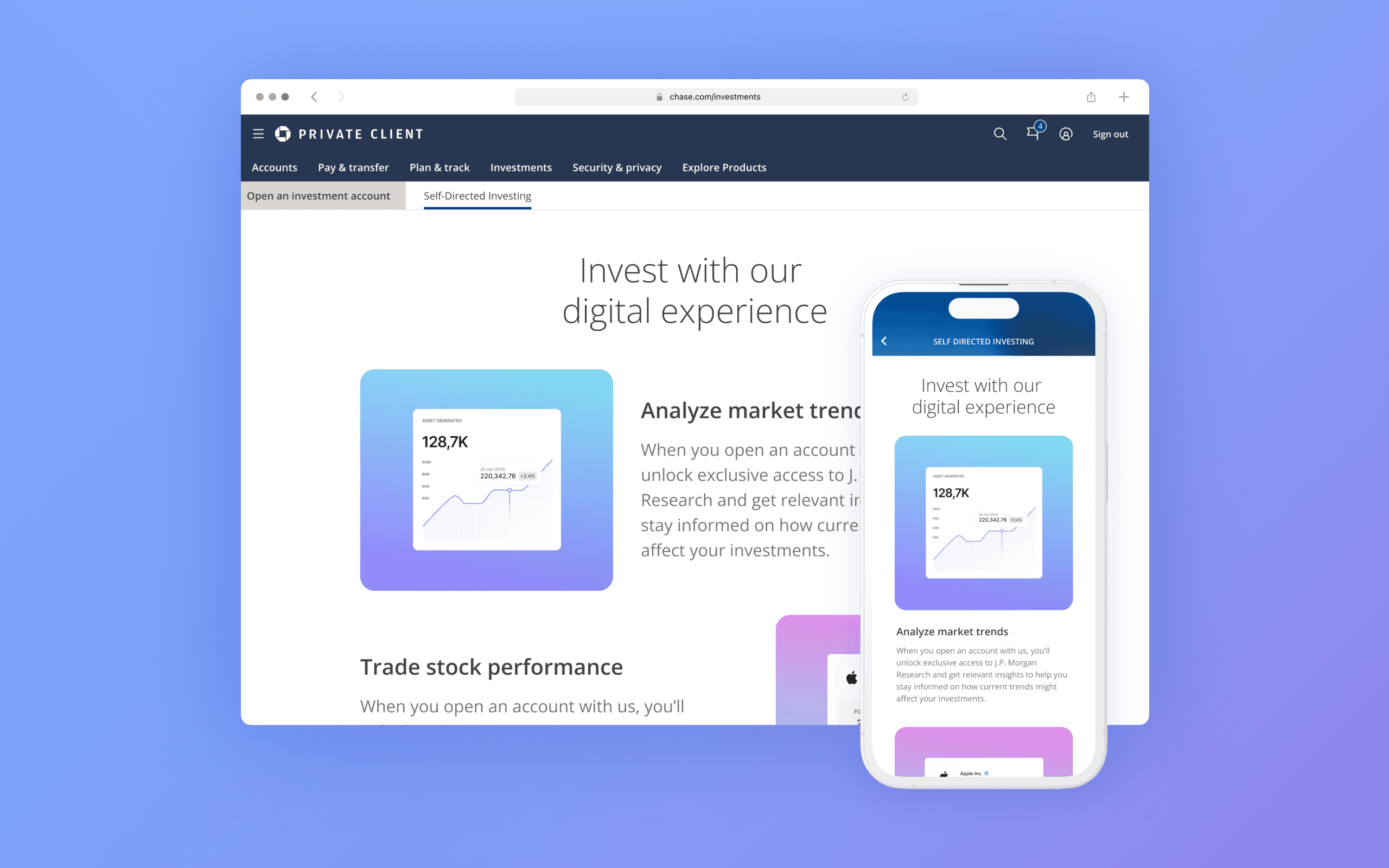
I led a streamlined approach to digital service design, enabling rapid development for the native app, enhancing chase.com mobile user experiences, and reducing maintenance down to a single source of code.
Role
Strategy
UX
UI
UXR
Prototyping
Objectives
Identifying opportunities
Chase experiences required both native and web builds
This was costly to build and maintain, and required product owners to decide if they wanted to build experiences for both web and native, or to choose a single platform to deploy to.
Lightbulb moment
If we could discover a strategy to reduce the feature gap and maintain consistency across the platforms, any future experiences could be developed on web and deployed within the native app, drastically reducing project scope and costs.
Cross platform audit
Visual differences
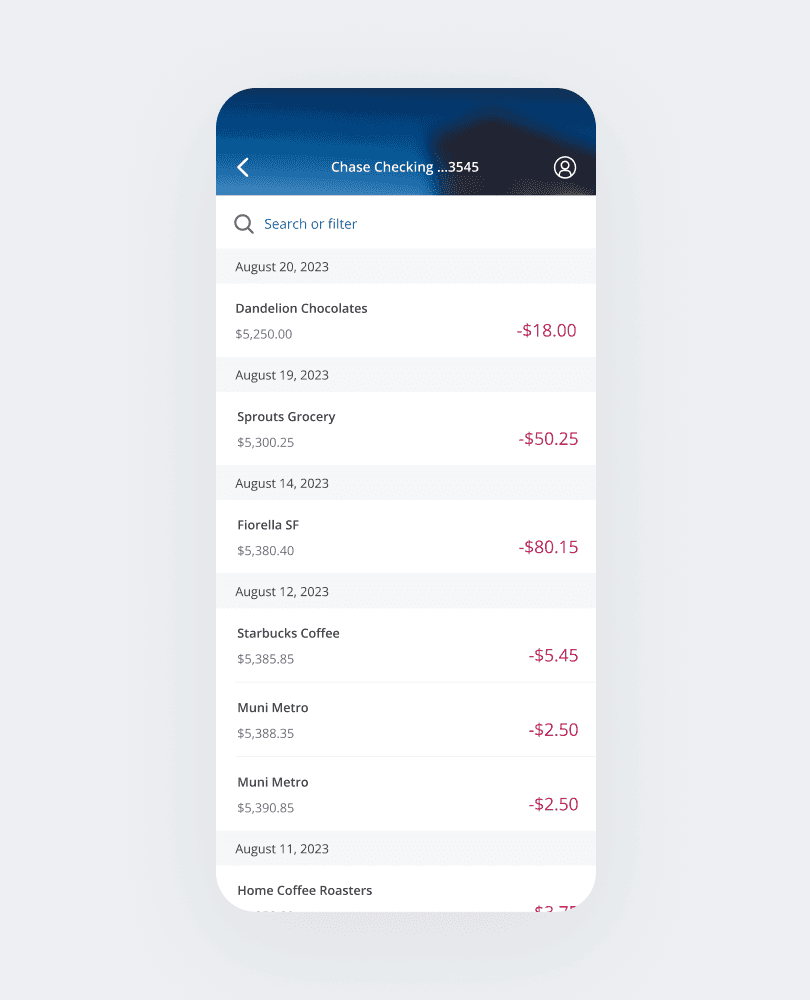
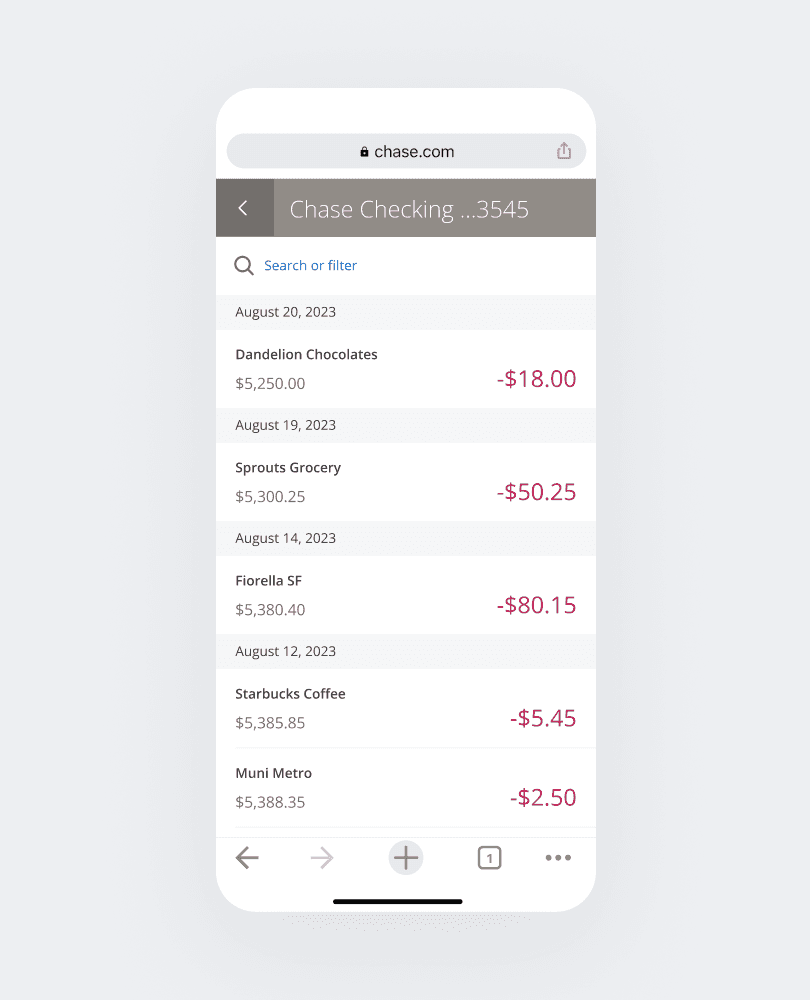
Screen title differences
Navigational differences
I uncovered significant navigational differences between web and native platforms. I brought these findings to design and engineering leadership in order to identify potential solutions that create a unified method of navigation and result in a customer being unaware they were navigating between web and native pages on the Chase Mobile app.
Back navigation
Native
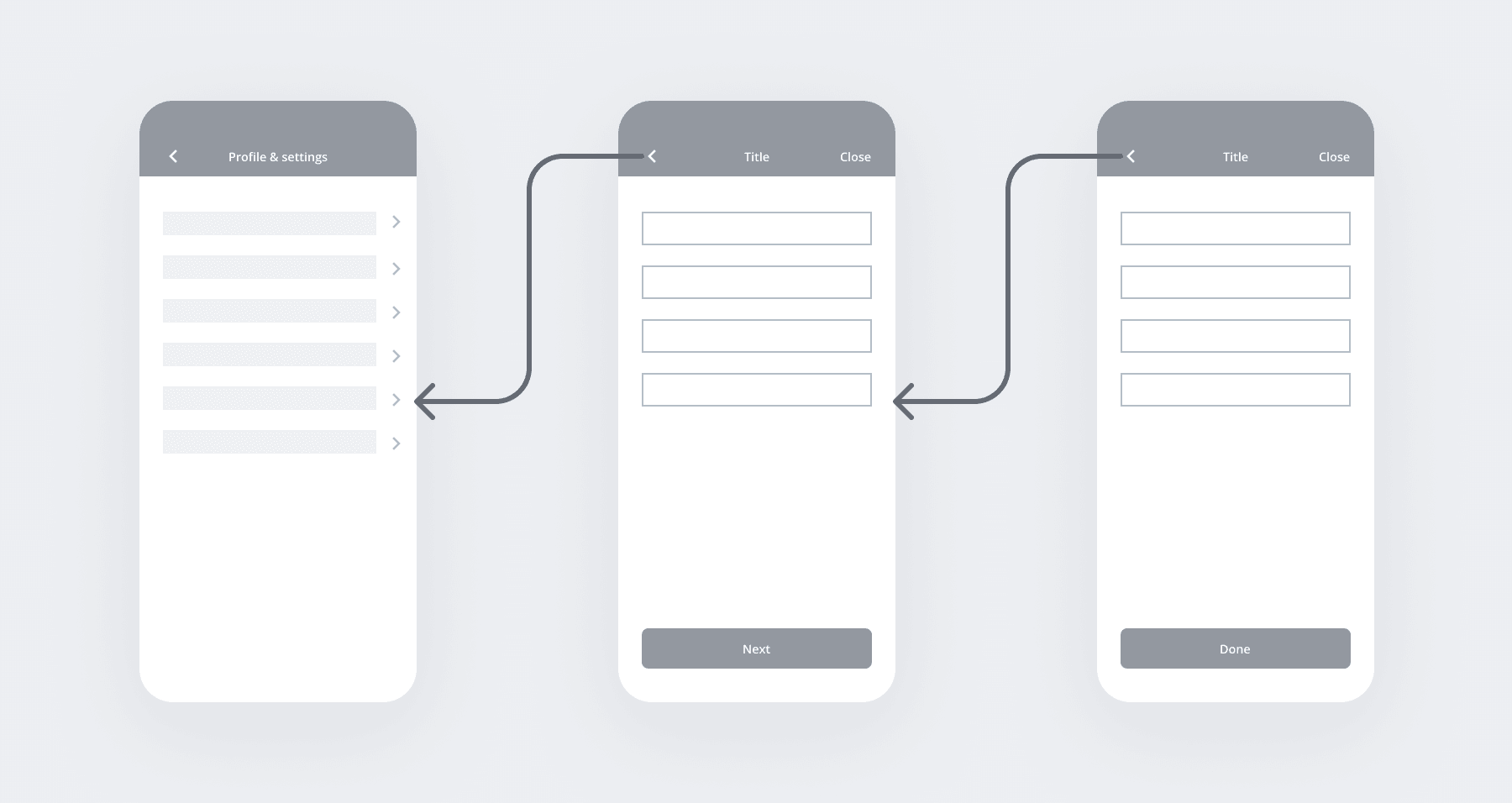
Interacting with the Chase Mobile app back arrow will return the customer to the previous screen.
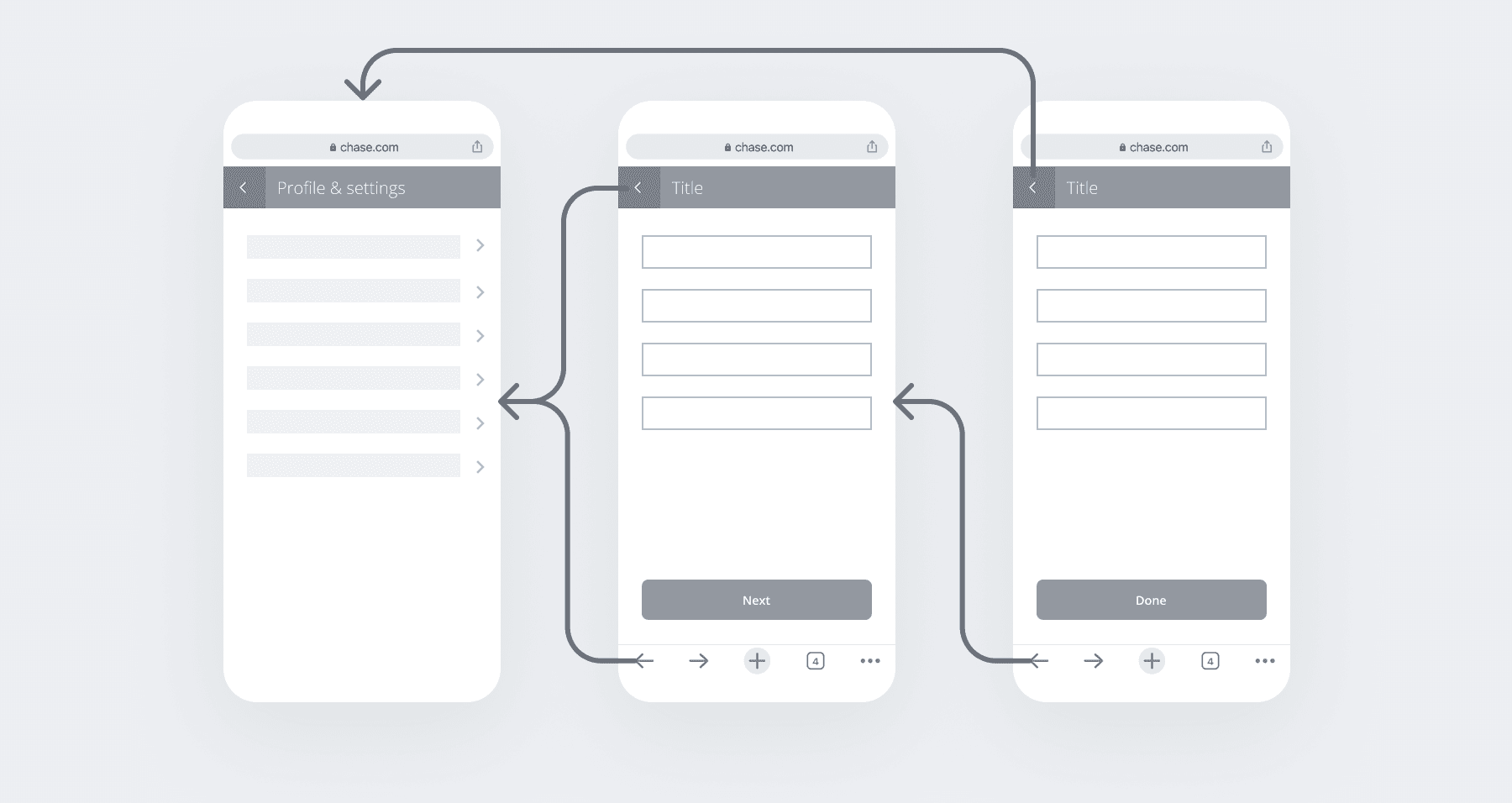
Web
Interacting with the web inline model header back arrow will return the customer to where they began their flow. Interacting with the browser back will navigate the customer back to the previous screen.
Ending a flow
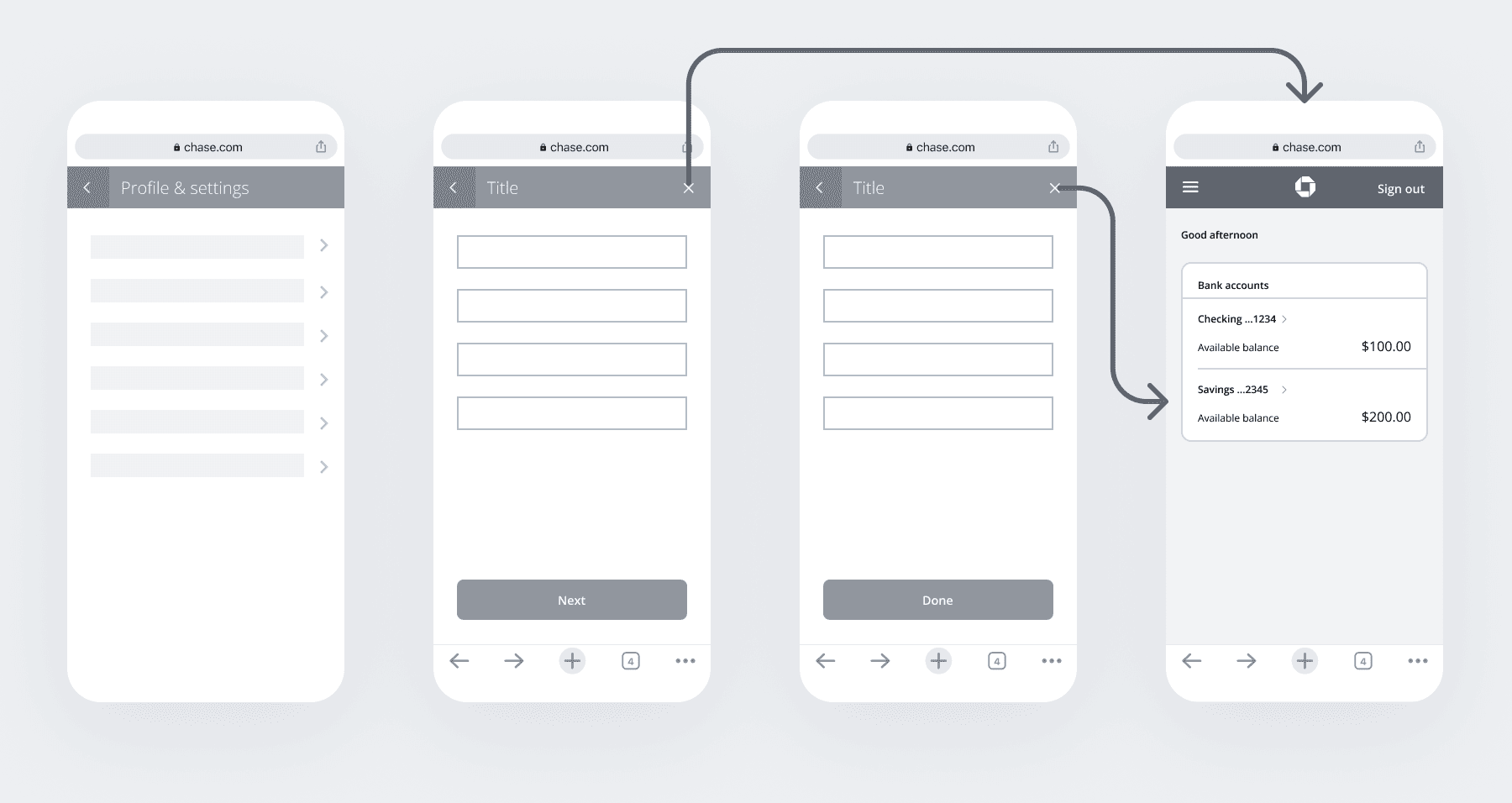
Native
Interacting with a Cancel/Done/Close button will take the customer back to where they began their workflow.
Web
Interacting with a Cancel/Done/Close button will take the customer back to the account dashboard.
Content differences
Content differed across the native and web platforms due to the web experience containing the robust, full-functionality of what Chase offers. The Chase web experience is designed to be used primarily on desktop, containing full content details and complexity.
In contrast, The mobile app is an on-the-go companion, with bite-sized tasks, simplified functionality, and less content density and details.
Principles and definitions
I crafted principles and definitions to establish a strategic solution that would enable Chase to frame any webpage within the native app, and for it to be indistinguishable from a native page visually and from an interaction standpoint.
Principles
Unified
Customers should not be able to tell that they’ve left a native environment.
Simple
Areas with a lot of functional complexity that don’t make sense to mobile users should be suppressed when possible.
Fast
Performance should be on-par with a native experience.
Definitions
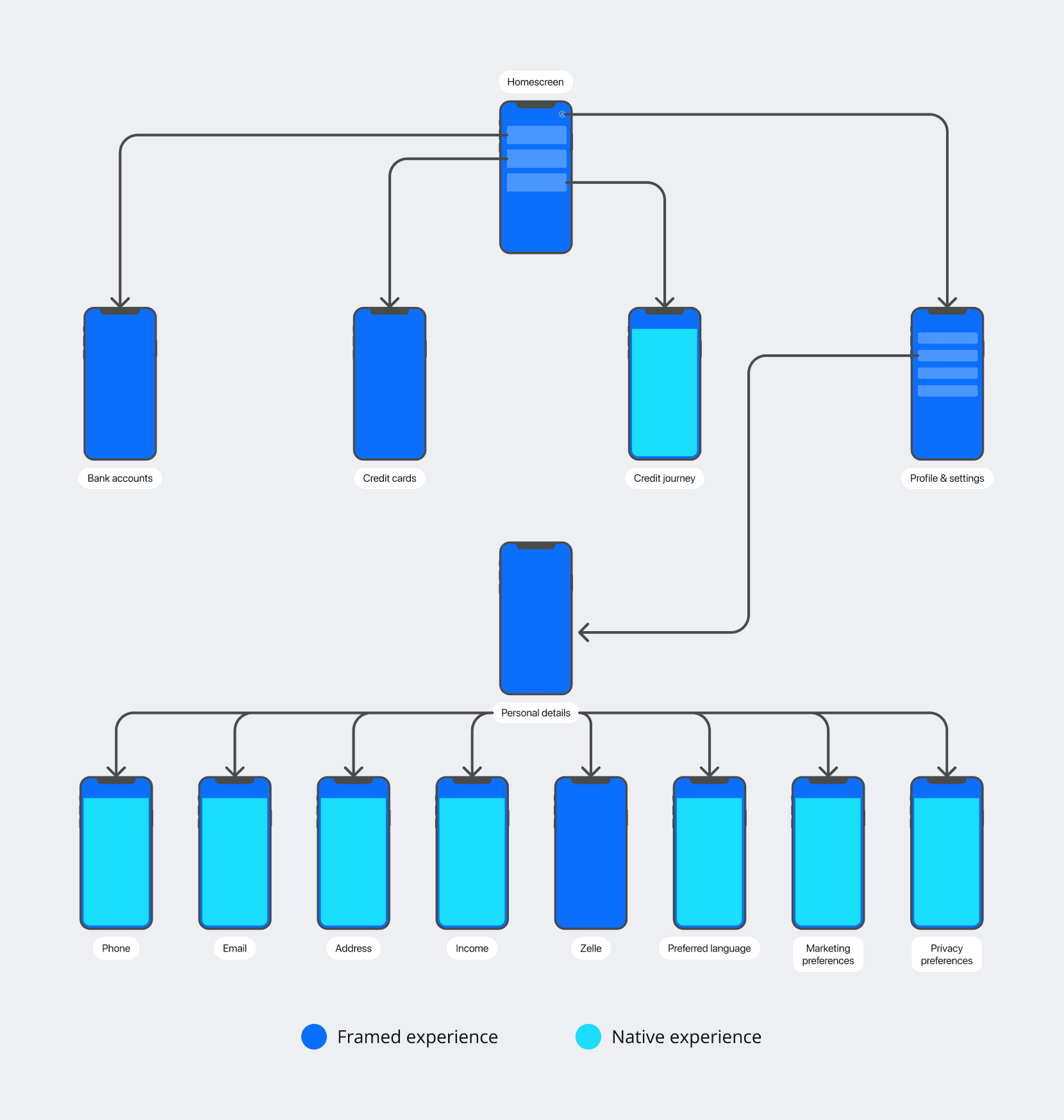
IA mapping
To ensure a seamless integration of web pages into the Chase Mobile® app, I documented the pattern differences between the two systems, providing recommendations that would achieve pattern parity and make web and native pages indistinguishable.
Pattern alignment
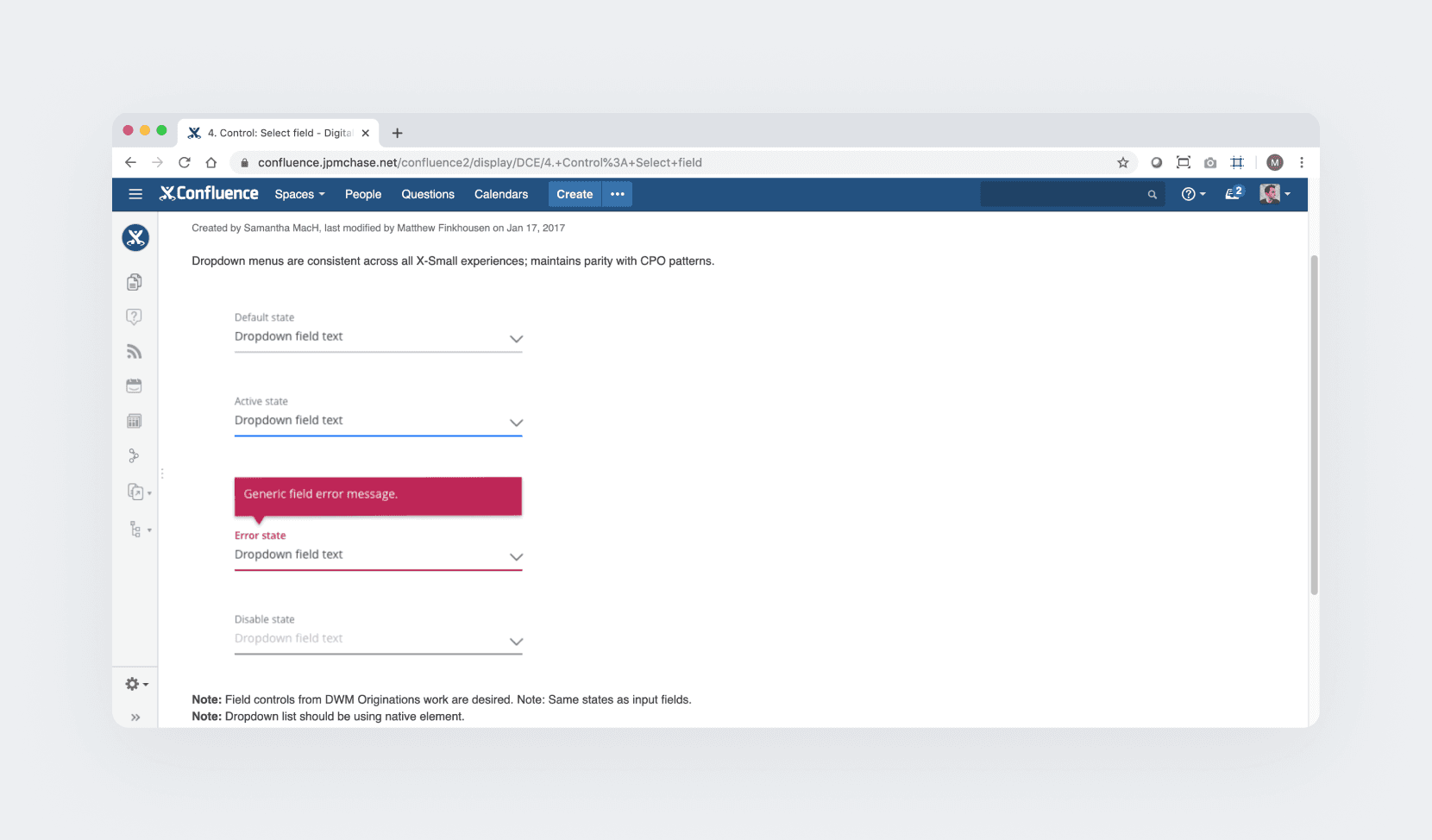
To ensure a seamless integration of web pages into the Chase Mobile® app, I documented the pattern differences between the two systems, providing recommendations that would achieve pattern parity and make web and native pages indistinguishable.
Component alignment
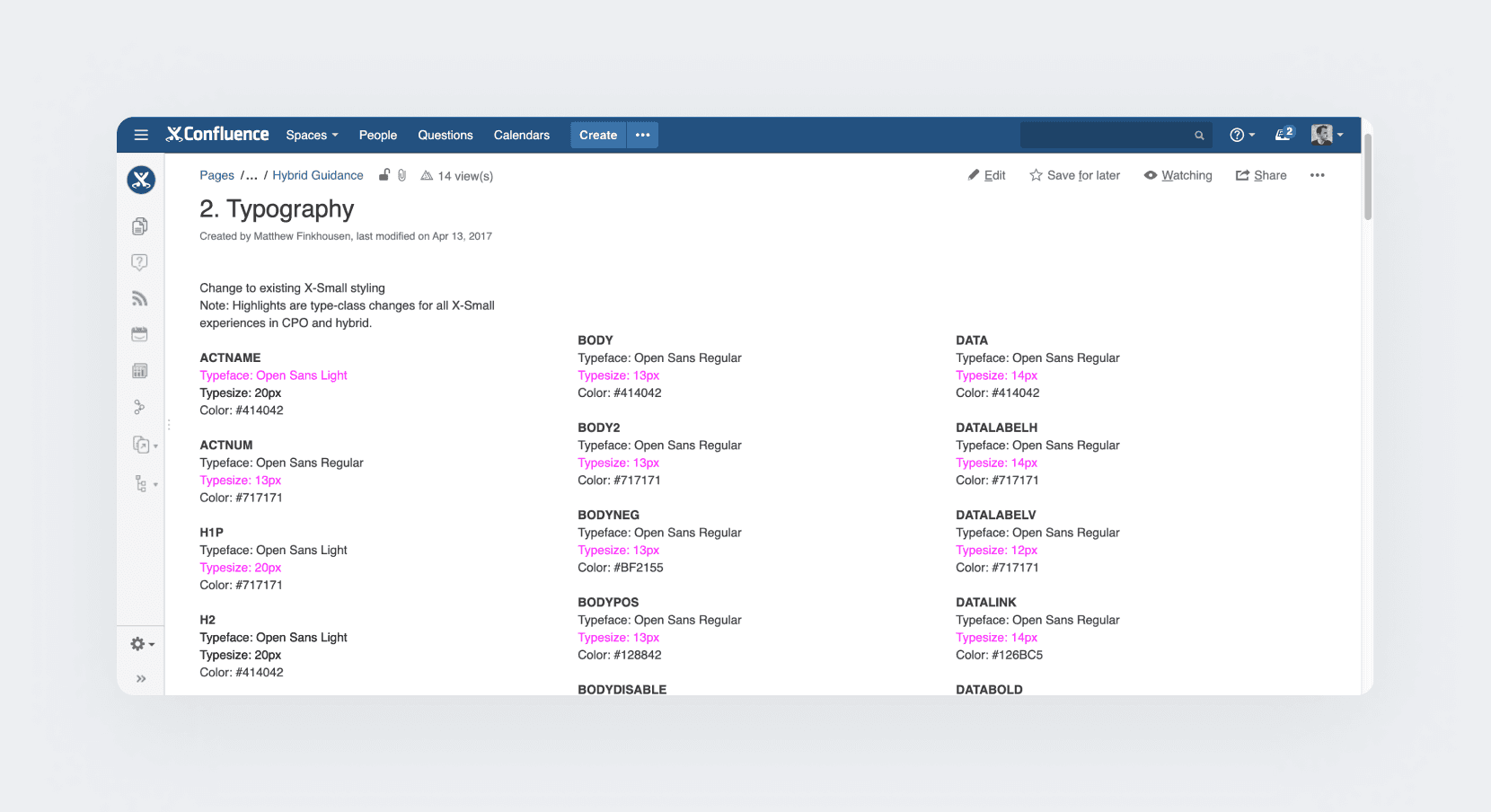
Typographic alignment
Release
Experience parity
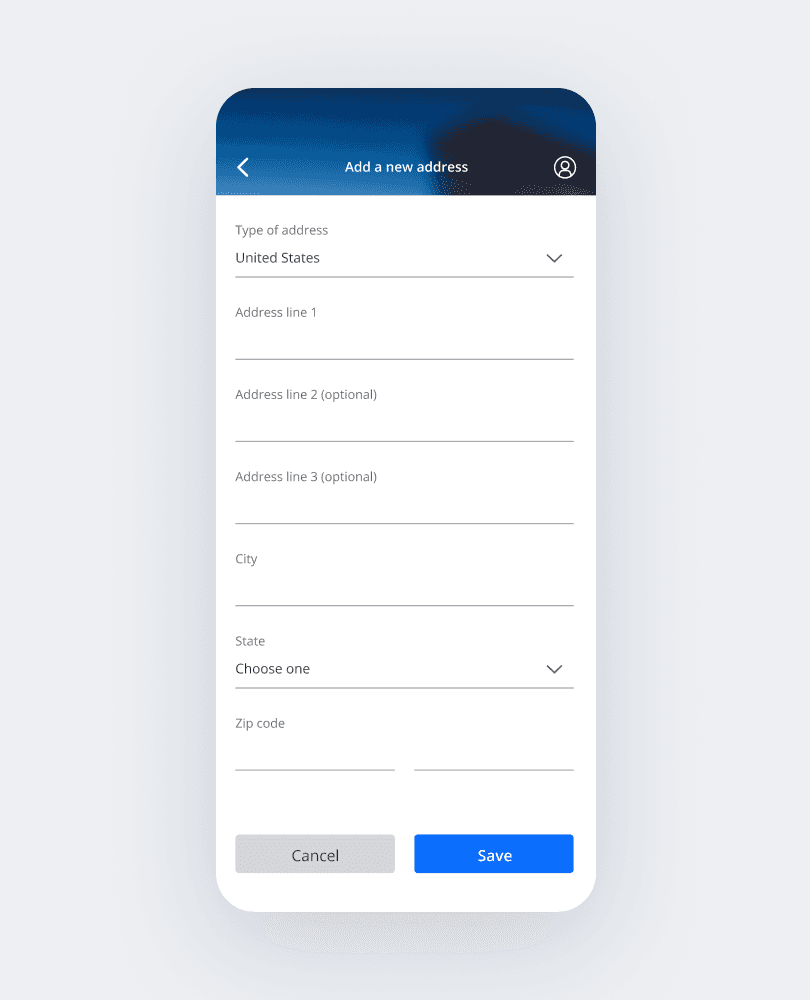
Native
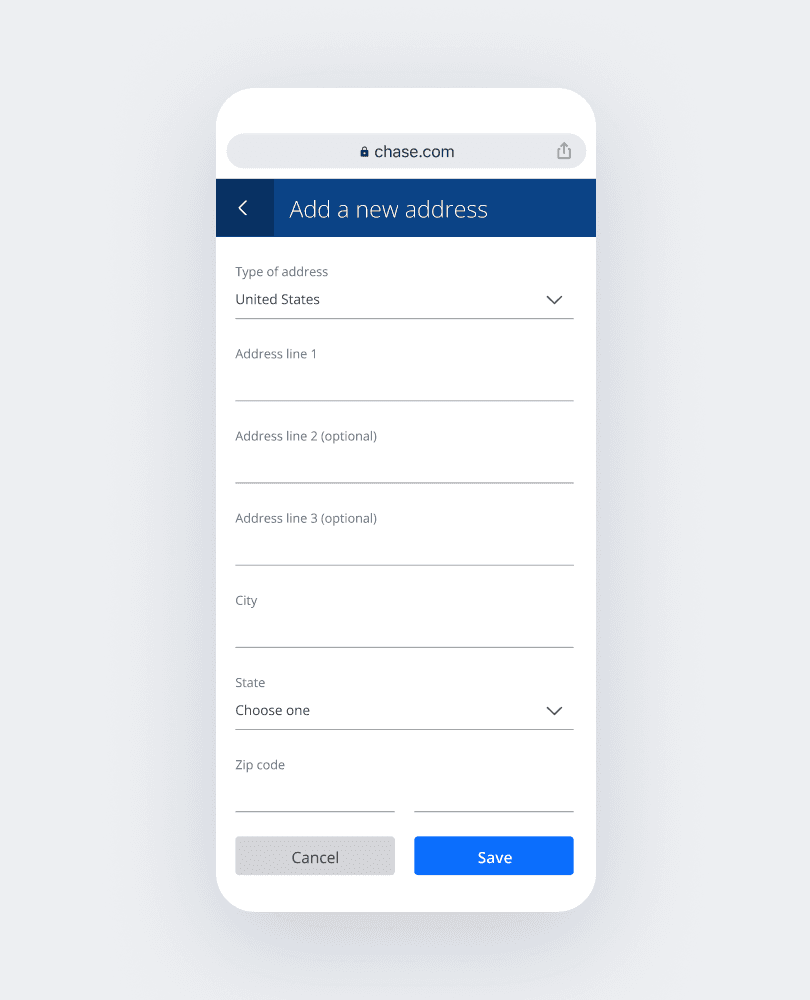
Web
Framed experiences
Using the established principles and playbook, other Chase teams were able to quickly create experiences using the framed approach, allowing them to deploy quickly, and maintain a single source of code.
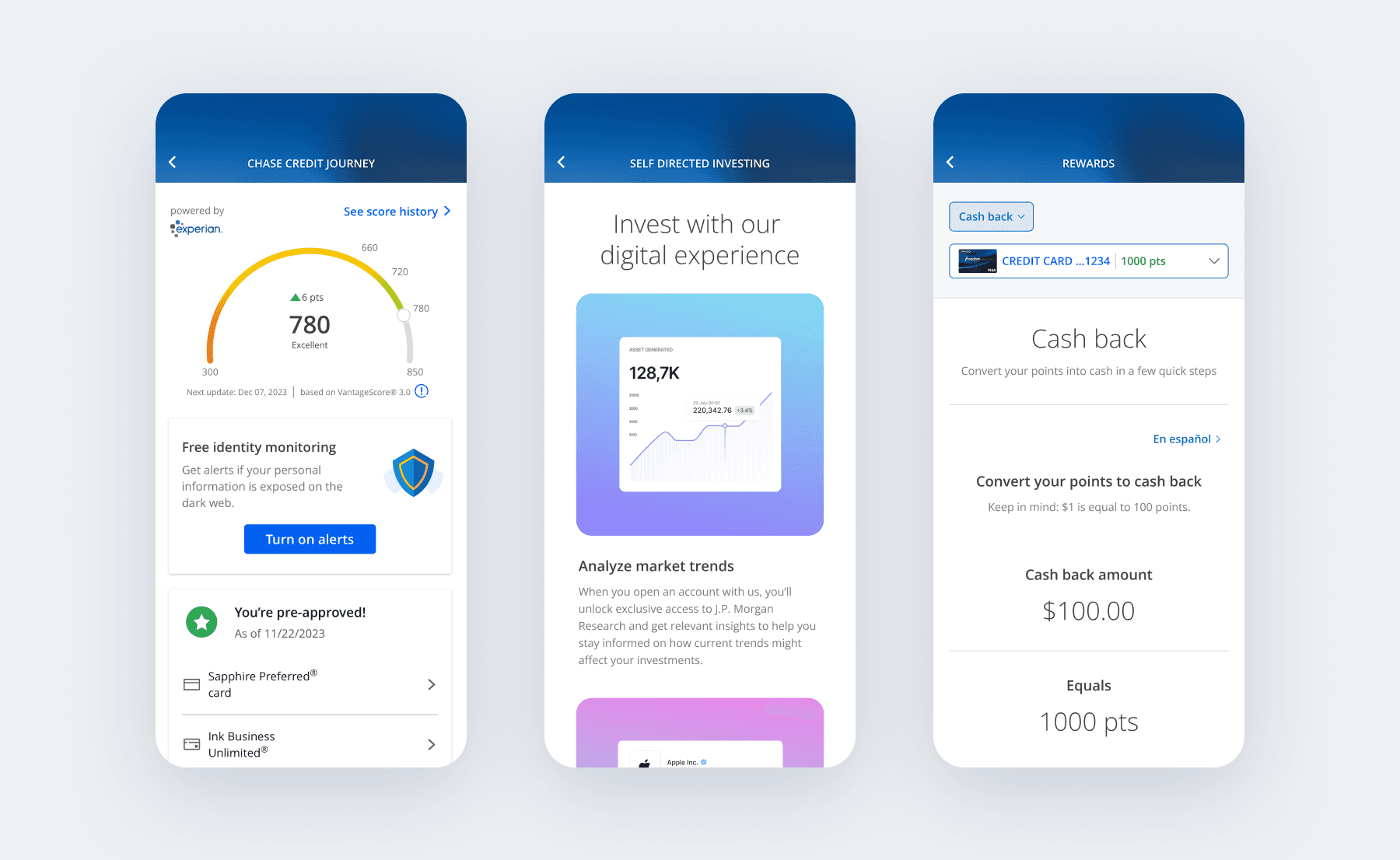
Framed experiences